How-To Guides
The Moka Pot Isn't Broken. Your Technique Is.
A recipe that controls heat, dose, and timing to produce a clean, concentrated cup from a $30 stovetop brewer — and a full accounting of why yours has been tasting burnt for years.
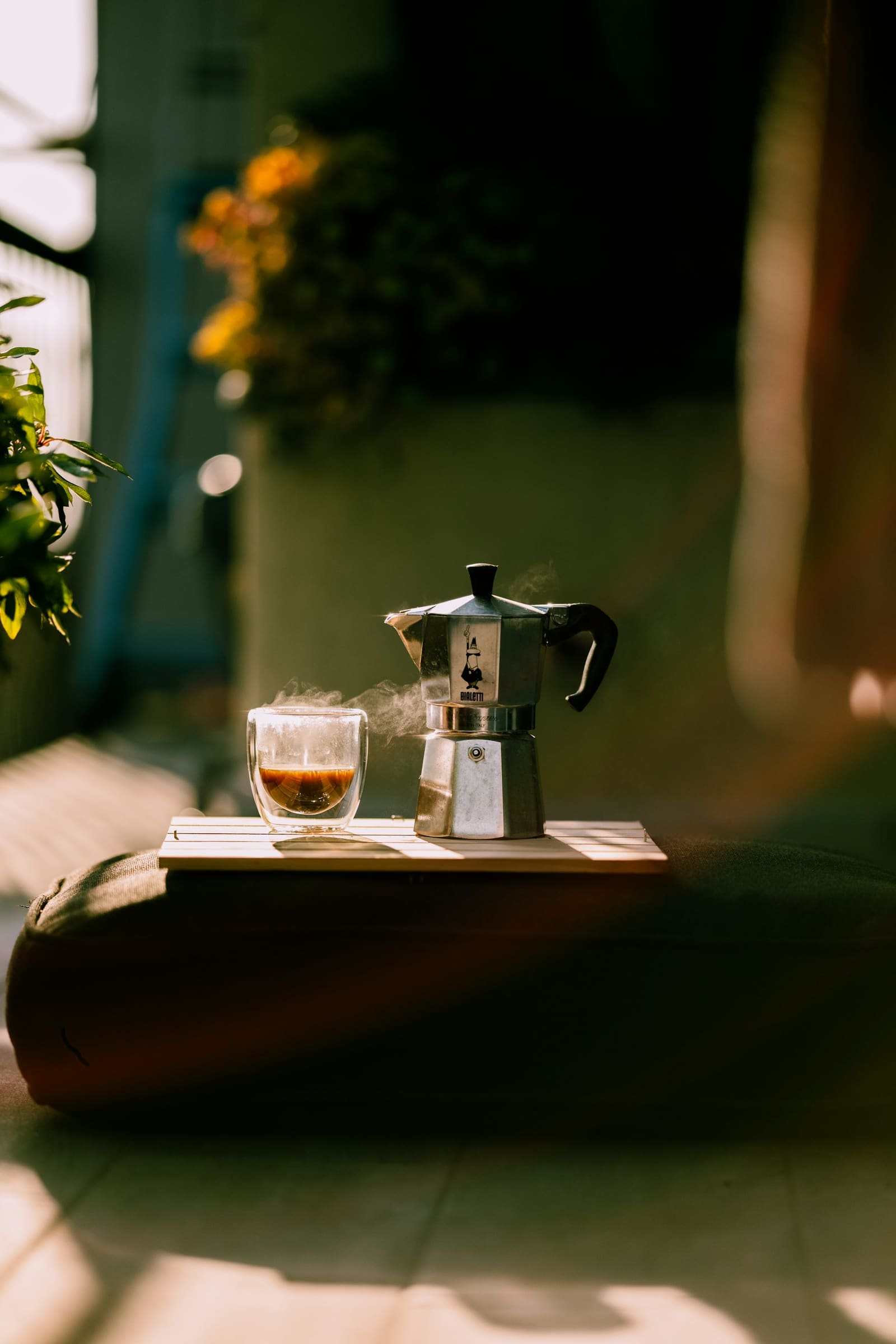
Somewhere between 300 and 400 million moka pots are in active use worldwide. Most of them produce coffee that tastes burnt. Not because the moka pot is a flawed device — it isn't — but because almost everyone who owns one was taught to use it wrong, and the wrong technique became so universal that people just accepted burnt as the moka pot's natural flavor profile.
It isn't. A correctly brewed moka produces a clean, intensely aromatic, espresso-adjacent cup with good body, clean acidity, and a finish that doesn't taste like an ashtray. I know because I've owned a Bialetti Moka Express for fifteen years and spent most of them making bad coffee with it until a barista in Rome watched me brew and told me, gently, that I was an idiot.
She wasn't wrong. Here's what she told me.
Why yours tastes burnt: a brief anatomy of the problem
The moka pot uses pressure — about 1.5 bar, far less than an espresso machine's 9 bar — to force water through a bed of ground coffee. The issue isn't the pressure. It's the heat.
Most people put a moka pot on medium-high or high heat, wait until the gurgling starts, and pull it off when it sounds done. This approach overheats the water in the bottom chamber before it pushes through the grounds, which produces superheated steam that scorches the coffee bed. The burnt flavor is literal: you're cooking the coffee from above with steam that's too hot.
The second common mistake is grinding too fine. Moka is not espresso. An espresso-fine grind in a moka pot restricts flow too much, builds excess pressure, overheats the brew water further, and produces a harsh, bitter, over-extracted result. The grind should be medium-fine — finer than filter but noticeably coarser than espresso.
The third mistake is filling the filter basket to heaping. Don't. Pack a level dose, don't tamp it (never tamp a moka basket), and leave the basket just slightly under-filled. Overfilled baskets restrict flow, build pressure, and contribute to the burnt-steam problem.
The fourth mistake is letting it gurgle. The long, bubbling, theatrical sound that most people wait for means you've already over-extracted. Pull it off the heat the moment the first sputtering sound begins — when the flow transitions from a steady stream to an interrupted bubble. That early sputtering is the signal that the water is running low and temperature is about to spike.
The recipe
You'll need a stovetop moka pot (any size — the ratios work for all), a kitchen scale, medium-fine ground coffee, and filtered water. An Aeropress stirrer or small spoon helps.
Fill the bottom chamber with cold or room-temperature filtered water to just below the pressure valve. Don't use hot water from the tap — some people recommend pre-heating the water to reduce contact time on the stove, but it makes heat control harder to learn at first. Start with cold or room-temp.
Grind your coffee at medium-fine — on a Baratza Encore, that's around setting 14–16. You want something that feels like slightly coarse table salt between your fingers.
Fill the filter basket level, not heaping. Don't tamp. Brush any loose grounds off the rim of the basket before seating it in the lower chamber.
Screw the top onto the bottom firmly. Cold water + good seal = a predictable pressure build.
Put it on medium-low heat. This is the key change. Not medium. Not low. Medium-low. If your burner goes 1 through 10, you want about 4. The goal is a slow, controlled heat rise.
Stand near it. The coffee should start flowing in 4–6 minutes. It will arrive as a slow, dark stream with some crema at the spout. Let it flow.
The moment you hear the first sputtering bubble — the first change in sound from steady stream to interrupted flow — remove the pot from the heat immediately. Wrap the bottom chamber in a cold, wet towel (or set it on a wet surface) to halt heat transfer from the metal. Pour immediately.
What you'll notice
The first correctly brewed moka will surprise you if you've been doing it wrong for years. The cup is darker and more intense than filter coffee but doesn't have the scorched bitterness you were used to. There's a sweet leading edge. The finish is clean and slightly chocolatey or fruity depending on the bean. You can smell it properly — not just "burnt coffee," but actual coffee.
The texture is thicker than pour-over but thinner than espresso. The concentration is roughly 2–3 times that of a normal filter brew, which makes it worth diluting slightly if you're drinking it black and aren't used to the intensity. A splash of hot water to bring it to 90–100ml from a 4-cup pot is not shameful.
A note on roast level
Moka pots love medium roasts. Not medium-dark, not dark — medium. A coffee roasted to a city or city+ level, where the surface oils haven't broken through, has the sugar development and body to hold up to the moka's pressure extraction without tipping into bitterness.
Light roasts are harder. They're denser, extract less readily, and the moka's limited pressure can struggle to pull enough from them. If you love light roasts, use a slightly finer grind and accept a slower flow.
Dark roasts (Italian roast, French roast, anything with a shiny, oily surface) will taste burnt in a moka pot regardless of your technique, because they're already roasted to the edge of combustion. This is not the moka's fault. The roast killed the sugars before the pot had a chance.
On the Bialetti and its imitators
The original Bialetti Moka Express, in aluminum, still makes excellent coffee. Aluminum gets a bad reputation — fears about health effects that the scientific literature doesn't really support, and complaints about metallic taste that are almost always actually caused by improper cleaning (rinse only, no soap; soap leaves a residue that tastes metallic). Rinse with hot water and dry thoroughly after each use.
Stainless steel moka pots (Bialetti's own stainless line, or the Ilsa or Alessi versions) work fine but take slightly longer to heat and are less forgiving at the bottom of the heat range. Start with medium heat rather than medium-low if you're using stainless.
The pot size matters less than people think. A 3-cup Bialetti and a 6-cup Bialetti both work well. Just know that filling a 6-cup pot with a 3-cup dose will produce a worse result — moka pots brew best when the filter basket is fully loaded for the pot size.
The barista in Rome
Back to the woman who called me an idiot, because she deserves the story.
I was at a friend's apartment in Trastevere. She was the girlfriend's roommate. She walked into the kitchen, watched me turn the burner up to high, and said, in English, with extreme gentleness: "Why are you cooking the coffee?"
I told her that's how you make a moka. She said no, you just make it fast and burnt, and those are different things. She turned the burner down to barely-on and stood with me for eight minutes while the coffee crept through at a crawl. The cup was different. Obviously different. Sweet where it had been bitter. Clean where it had been smoky.
She said her mother had made it this way in Napoli for forty years.
I've been doing it this way since 2013. Forty grams of coffee in a 3-cup Bialetti, medium-low heat, off at the first sputtering sound. Eight minutes I would otherwise have spent making a burnt cup faster.
The practical checklist
Before you brew: cold filtered water to below the valve, medium-fine grind, level basket, no tamp, firm seal.
While you brew: medium-low heat, no lid if you want to watch the flow, attention on the sound.
At the first sputtering: off the heat, cold towel on the base, pour immediately.
After brewing: hot-water rinse only, dry completely, store disassembled.
That's it. The same pot you've had on your shelf for five years, probably. The same coffee. A completely different cup.
The moka pot is one of the most forgiving brewers ever made. It tolerates bad coffee, tap water, and inconsistency. When you give it decent coffee and a little patience, it gives you back more than it had any obligation to.