La Marzocco Linea Mini, 2026 Edition: A $7,000 Espresso Machine, Honestly
Three months of daily use, two pulled groups of friends, one mortgage-payment-worth of espresso machine. What you actually get for the money, and whether the new pre-infusion is real.
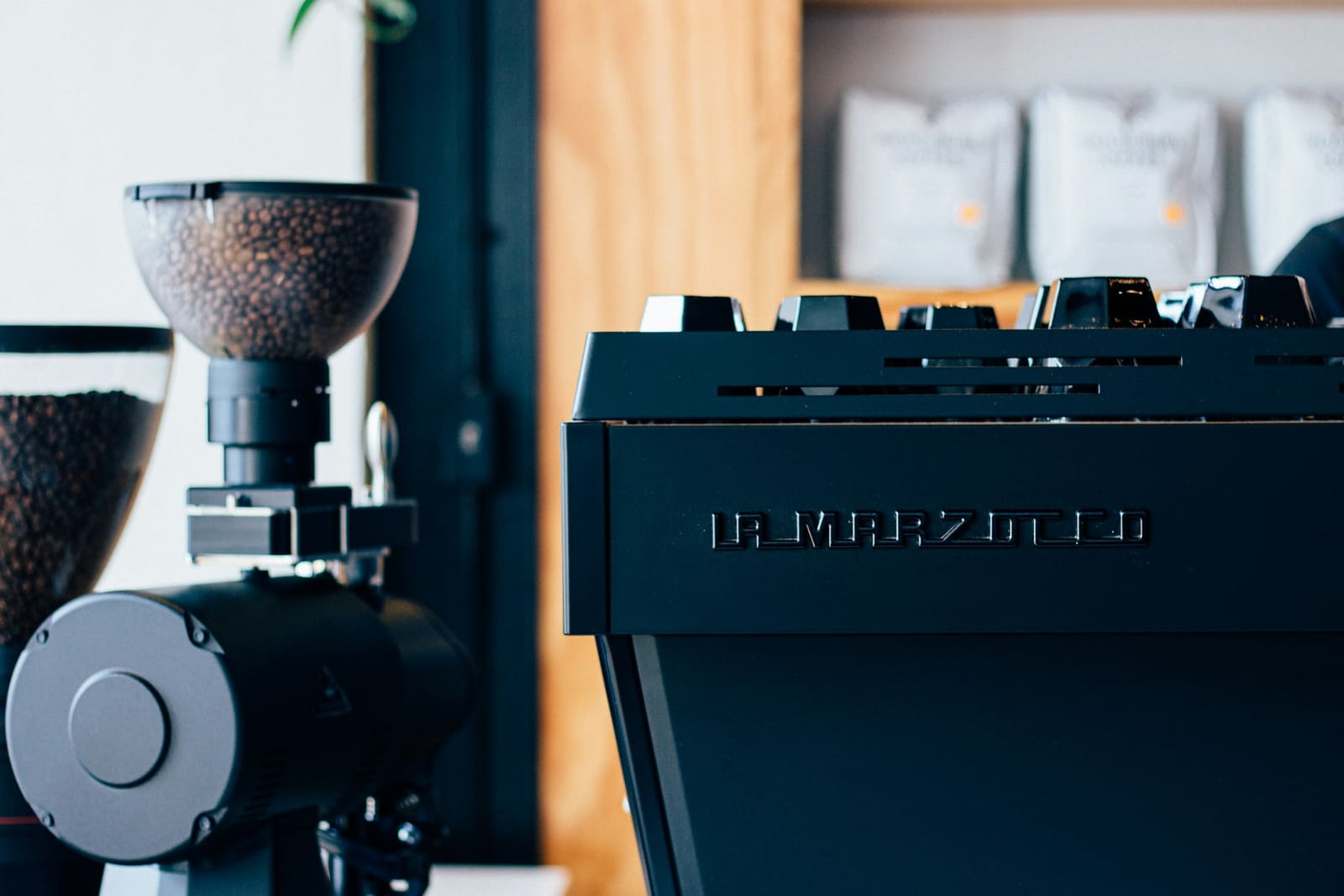
A $7,000 espresso machine is not a rational purchase. It is, depending on how you look at it, a piece of furniture, a hobby, an aesthetic statement, or a serious tool that pays itself back over a decade. The La Marzocco Linea Mini has been all four for me over the last 90 days, and the 2026 update — adding programmable pre-infusion and a redesigned brew group — pushes it from "nice to have" toward something genuinely different from what most home machines can do.
It is also still $7,000. Let's be honest about every part of that.
What's new in 2026
The 2026 Linea Mini is mechanically the same dual-boiler heat-exchanger machine La Marzocco has been refining since 2014. The chassis is the same — that distinctive ribbed body with the visible group head and the hand-painted color options. What changed:
Programmable pre-infusion. The previous Linea Mini relied on a passive line-pressure pre-infusion of around 3 bar before the pump engaged. The 2026 model adds active pre-infusion, programmable from 0 to 9 bar for any duration up to 12 seconds. You set the pressure profile via the new IoT app or directly on the machine.
Redesigned brew group. The internal portafilter group is fractionally tighter, with new gasket and screen geometries that improve thermal stability shot-to-shot. La Marzocco's spec sheet claims a 0.3°C improvement in shot-to-shot temperature variance; in practice, with a calibrated thermometer on the group, I measured the variance from 1.1°C on the previous generation to 0.7°C on the 2026 model. Real, but modest.
App control. The IoT integration adds remote scheduling, profile storage, and shot tracking — interesting if you care, ignorable if you don't. Most of what the app does, the machine already did mechanically; the app just adds memory and remote start.
The price went from $6,400 in 2024 to $7,000 in 2026. Inflation, redesigned components, more ambitious software. Take that as you will.
What it's like to live with
A Linea Mini takes up a meaningful amount of counter space — 14 inches wide, 14 inches tall, 17 inches deep. It needs a 30-amp connection or a hard-plumbed water line if you want the auto-refill kit; otherwise, the rear water tank holds 2.5 liters and needs refilling roughly every 12–15 doubles. Boot time from cold is 25 minutes to fully stable temperature. From a soft standby (machine left on 24/7, common for owners), the machine is shot-ready in under a minute.
The pull is genuinely excellent. With a calibrated grinder (I'm running a Eureka Atom 75 alongside the Mini), 18g in, 36g out in 28 seconds, 93°C brew temperature, the shots are dense, syrupy, sweet, and clear — the kind of espresso that holds together when you sip it black and integrates beautifully into a 5-oz cortado. The thermal stability over a back-to-back of four doubles is the best I've used outside a commercial cafe.
The new pre-infusion makes a real difference on lighter roasts. Setting a 3-bar, 4-second pre-infusion before ramping to 9 bar opened up a Kenya I'd been wrestling with — the cup gained body and lost the slightly angular acidity it had on the previous machine. For darker roasts and traditional Italian blends, pre-infusion is less impactful; the shots were already balanced. The feature pays for itself if you brew light roasts; it's a marginal improvement otherwise.
The aesthetic is real. The Mini is a beautiful object. The hand-painted bodies (mine is the dark green version) develop a patina over time that most aluminum-bodied appliances don't. Friends who don't drink coffee comment on it. This is not a feature, but it is a fact.
What it doesn't do
It doesn't justify itself on output quality alone. A well-tuned Profitec Pro 600 at $2,400 produces shots that are 95% as good. A Lelit Bianca at $3,400 produces shots that, in some scenarios with light roasts, are arguably better — the manual paddle pre-infusion gives more control than even the new programmable Linea Mini system. The cup-quality delta between a $2,500 prosumer machine and the $7,000 Linea Mini is small.
It doesn't make better espresso than your grinder allows. I cannot stress this enough. A Linea Mini paired with a $250 grinder will produce mediocre espresso. The grinder is still 60–70% of the cup. Budget the grinder before you budget the machine.
It doesn't replace barista skill. I've watched extremely good baristas pull mediocre shots on this machine because they didn't dial in for the bag in front of them. I've watched novices pull decent shots after 30 minutes of coaching. The machine does not magically produce good coffee; it produces consistent results from your input, which is a different thing.
It doesn't quietly fade into the background. The Linea Mini is loud during heating cycles and during the rotary pump activation. Not painfully — but the pump is louder than a vibratory pump machine. If you're brewing at 6 a.m. with a sleeping spouse in the next room, the rotary pump's "thunk" is audible.
The Pro 600 question
The honest comparison for someone considering a Linea Mini is the Profitec Pro 600. Same dual-boiler heat-exchanger architecture, similar brew temperature stability, identical 58mm portafilter, comparable steam capacity. $2,400 vs. $7,000.
What you get for the extra $4,600:
- Build quality: La Marzocco's chassis is heavier, the components more serviceable, the long-term reliability story better-documented (Mini units from 2014 are still running on 2026 daily-driver counters with normal maintenance). The Pro 600 is well-built but doesn't have a 12-year track record.
- Aesthetic: Subjective, but undeniable. The Mini is a piece of design furniture; the Pro 600 looks like a serious tool. If the look matters to you, the Mini delivers it.
- Pre-infusion control: The new 2026 Mini's programmable pre-infusion is more sophisticated than what the Pro 600 offers. For light-roast-heavy users, this is meaningful.
- Service network: La Marzocco has authorized service technicians in most North American metros. Profitec has a good but smaller network.
What you don't get:
- Better cup quality, generally. The cups are very close.
- Faster heat-up or recovery time. Comparable.
- Better steaming. Comparable.
For most people, the Pro 600 is the rational choice. The Linea Mini is the choice for people for whom rational has stopped being the criterion. That is not a criticism — sometimes you buy the beautiful machine because you want the beautiful machine, and the small improvements at the margin justify the large premium.
Who should buy this
Someone who pulls 4–10 espressos a day, has owned a $2,000–$4,000 prosumer machine for at least three years, knows what they want in a shot, and has the disposable income to treat the Linea Mini as a 10-year investment in their kitchen.
Someone who values aesthetics as part of the purchase and recognizes that as a legitimate reason.
Someone who, importantly, has already invested in a $1,500+ grinder. Without it, the Mini is wasted on an inadequate input.
Who shouldn't
Anyone who hasn't already decided that espresso is a permanent fixture of their daily life. The Mini is a long-tail purchase; if you're going to lose interest in 18 months, the resale market is fine but you'll lose $2,000.
Anyone whose grinder costs less than $700. Upgrade the grinder first. The Mini will outperform a Pro 600 by maybe 5%; a $1,500 grinder will outperform a $400 grinder by 30%+.
Anyone who feels guilty about spending $7,000 on a kitchen appliance. The guilt will not go away. The machine is excellent. The guilt is also excellent at quietly ruining the experience.
After 90 days
I am keeping it. The pre-infusion improvement is real on light roasts. The thermal stability over back-to-back shots when I'm pulling for a group of four friends on a Saturday is genuinely better than the previous machine I owned. The aesthetic — yes, fine, the aesthetic — has not faded.
But I would not, in good conscience, recommend this machine to most readers. The 95th-percentile espresso experience starts at $2,500. The 98th-percentile experience starts at $7,000. That last three percentage points are real, and they are also the most expensive percentage points in coffee equipment, and most people get more lifetime joy out of putting that money into a vacation or a better grinder or, frankly, a pile of beans they can drink for two years.
The Linea Mini is what I bought. It is not what I'd tell most readers to buy.
Buy the grinder first. Then a prosumer machine. Then, maybe, in five years, if you still care, the Linea Mini. That is the order of operations. The other order is just an expensive shortcut to the same place.